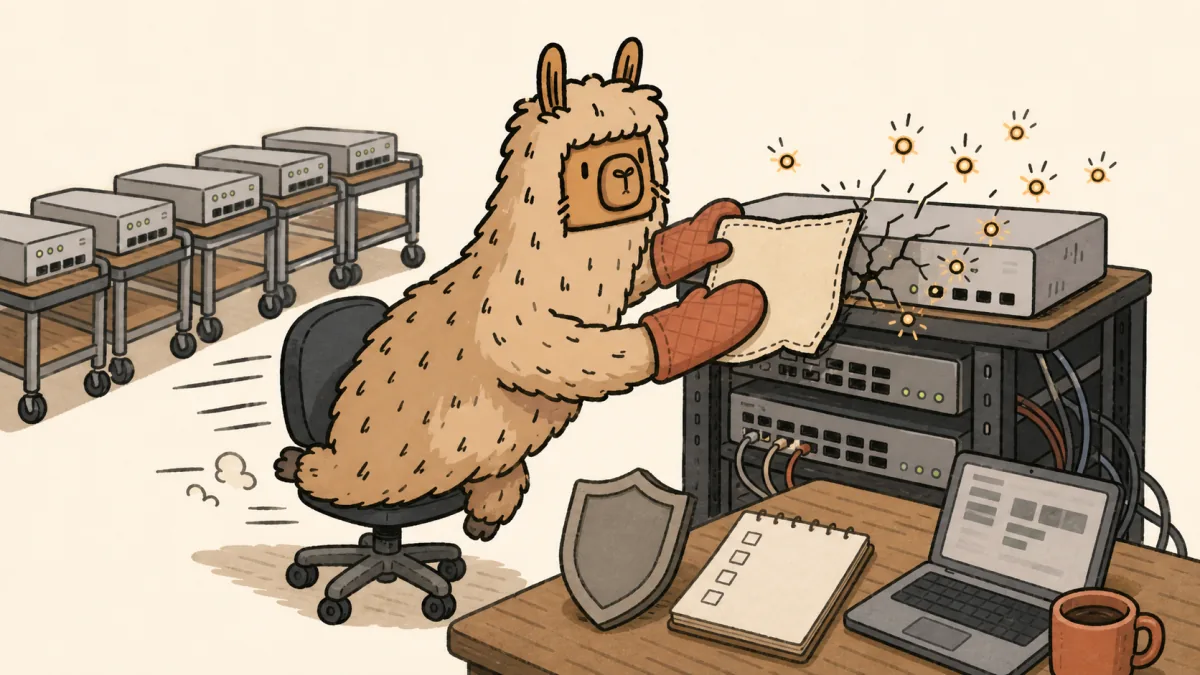
Vendor Breach Response for MSPs: Client Calls and CRM Exposure
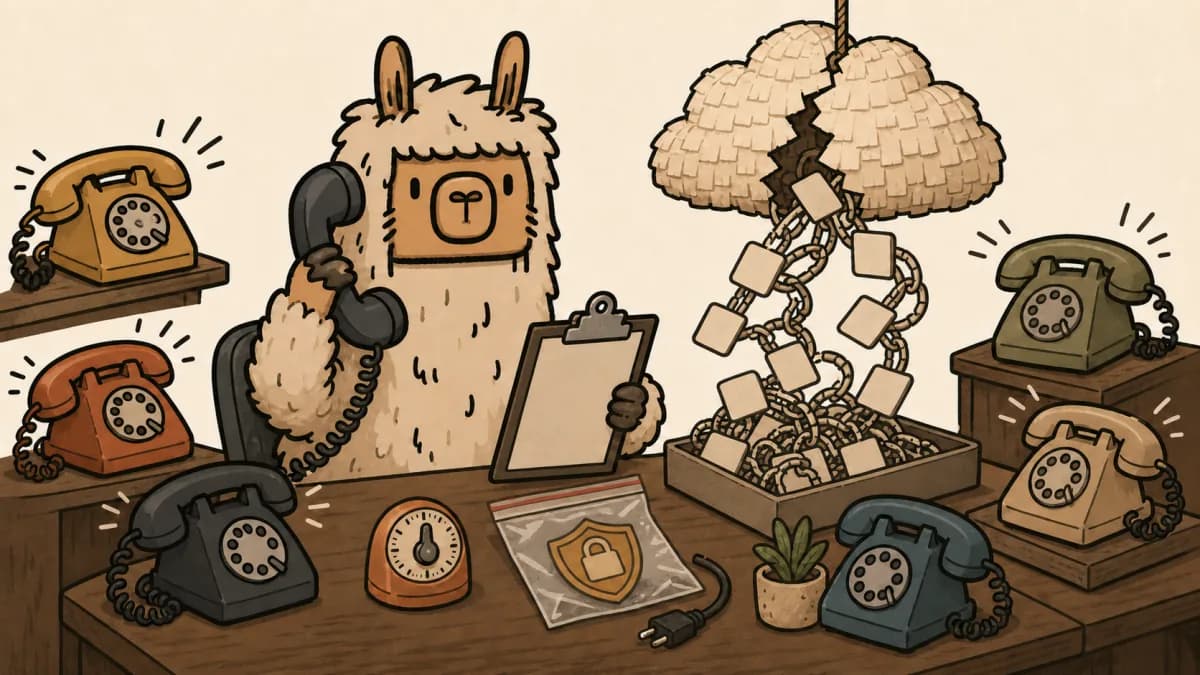
Vendor breach response MSP work gets messy fast because clients do not care whose logo was on the breach notice. They care whether their data was touched, what they should do now, and whether you already know the answer.
That is the uncomfortable part of third-party SaaS incidents. The compromised system may not be yours. The client relationship is still yours. If you wait for perfect vendor clarity before saying anything, the client hears silence and fills the gap with panic.
The job is not to cosplay as outside counsel or promise facts you do not have. The job is to create a calm rhythm: confirm affected systems, preserve evidence, set update times, draw the scope line, and turn cleanup into paid follow-up work when it goes beyond normal support.
Vendor breach response for MSPs starts with four things: what system was affected, what client data could be involved, what evidence you can verify, and when the next update will happen. Do not call a client safe because a vendor blog post sounds reassuring. Match vendor claims against logs, tokens, exports, tickets, and your own service scope.
Why the Klue incident matters to MSPs
The June 2026 Klue incident is a useful example because it does not look like a normal endpoint compromise. Klue said an attacker gained access through a compromised legacy credential tied to an integration service, then obtained OAuth tokens used to connect Klue with third-party platforms, including Salesforce, and accessed data in connected customer environments. Klue also said it revoked affected credentials and tokens, removed unauthorized code, disabled potentially impacted integrations, notified law enforcement, and engaged CrowdStrike.
ReliaQuest reported that attackers used Klue integration service accounts and OAuth tokens to pull Salesforce CRM records through REST API queries. In one observed environment, the actor sent almost 1,000 queries in 15 minutes. In another, extraction lasted more than six hours. That is not a weird helpdesk ticket. That is bulk CRM data access through a trusted app identity.
Huntress said its affected Salesforce data could include business names, products trialed or used, subscription details, business contact information, sales communications, and opportunity notes. Huntress also said its products, infrastructure, telemetry, passwords, payment cards, and engineering systems were not impacted.
That distinction is exactly what clients need from an MSP: not vague reassurance, but a data-class answer. Business contact details are different from passwords. Opportunity notes are different from threat telemetry. Pricing data is different from payment card data. Say what is known, say what is not known, and stop there.
Salesforce also disabled the Klue Battlecards connection while the incident was investigated, according to BleepingComputer coverage of Salesforce's status notice. The lesson is boring and important: a connected app can become part of the client's attack surface even when Salesforce itself is not the vulnerability.
First-hour checklist for an MSP vendor breach response
Your first hour should create order, not a 12-page incident report or a Slack spiral. Use this checklist before calling clients:
- Name the vendor and integration path. Identify the vendor, the app, the connected systems, and whether the app had read, write, admin, export, or API access.
- Confirm whether any managed clients used it. Pull from your PSA, documentation platform, SSO app inventory, browser extension inventory, SaaS management tool, or billing records. Do not rely on memory.
- Capture the vendor statement. Save the notice, status page, email, blog post, support ticket, and any customer-specific guidance. Screenshots are fine. PDFs are better.
- List possible data classes. Contacts, account notes, invoices, files, chat logs, call recordings, credentials, tokens, admin actions, support tickets, or customer content. Keep this list factual.
- Assign one internal owner. One person runs the timeline, questions, client updates, and evidence tracker. Everyone else feeds that owner.
- Set the next update time. If you have nothing new, say that at the promised time. Silence looks worse than a short status note.
This is also where your MSP SLA template matters. If vendor breach review, forensic log review, and client notification support are included without limits, you may have sold unlimited incident consulting by accident.
What to tell clients without overpromising
Do not send clients a screenshot of a vendor statement and call it communication. They need the MSP translation.
A useful first client update has five parts:
What happened: "A vendor we use, [Vendor], reported unauthorized activity affecting [system or integration]. We are reviewing whether your environment or data is in scope."
What we know: "The vendor has stated [specific fact]. Our current review shows [specific MSP fact]."
What we do not know yet: "We have not yet confirmed [records, accounts, exports, tokens, or client-specific exposure]."
What we are doing now: "We are reviewing connected apps, OAuth grants, API activity, admin actions, and related support tickets. We have also requested customer-specific logs or confirmation from the vendor."
When you will hear from us again: "We will send the next update by [time], even if the update is that we are still waiting on the vendor."
The tone should be plain. No "we take security seriously" paragraph. Every company says that after a breach. It teaches the client nothing.
The best MSP client breach communication is specific, time-bound, and careful. Tell clients what is confirmed, what is unconfirmed, what you are checking, what they should do now, and when the next update arrives. Do not answer legal notification questions unless counsel has given the language.
Evidence to pull before you answer "are we affected?"
Vendor incidents punish sloppy records. If your app inventory is stale, your service account list is folklore, and your CRM exports are not logged, every client call takes longer.
Start with the evidence that can prove or disprove exposure:
| Evidence area | What to check | Why it matters |
|---|---|---|
| Connected apps and OAuth grants | App name, scopes, user consent, refresh tokens, last used date, source IPs | Trusted app identities can retain access after passwords change |
| API and export logs | Query volume, bulk exports, unusual user agents, large pagination, unfamiliar IPs | CRM theft often looks like valid API traffic until you inspect volume |
| Admin actions | App installs, permission changes, user creation, role changes, token revocation | Confirms whether access changed before or after the vendor notice |
| CRM records | Accounts, contacts, opportunities, notes, quotes, attachments | Helps define what data classes could be exposed |
| Mail and collaboration rules | Forwarding rules, delegated access, shared drives, external shares | Vendor incidents can expose adjacent data paths |
| PSA and ticket history | Who approved the app, what scope was sold, what client refused | Determines whether the response is normal support or a new project |
ReliaQuest recommended revoking and rotating credentials and OAuth tokens, including refresh tokens, reviewing Salesforce API activity, and restricting integration API access to known infrastructure. Even if your client does not use Salesforce, the pattern transfers to Microsoft 365, Google Workspace, HubSpot, Slack, Gong, SharePoint, and every SaaS app that became business-critical without anyone admitting it.
Draw the scope line before support becomes free incident work
A vendor breach response can start as support and become billable incident work in under an hour. That is not greedy. That is accurate.
Normal support might include checking whether a client uses the vendor, reviewing the vendor notice, disabling a connected app, rotating a token, and sending a basic client update.
Billable incident work starts when the client needs log review across multiple systems, data exposure analysis, counsel-ready timelines, executive briefings, insurance support, after-hours response, user outreach, CRM cleanup, or control remediation. Those are projects. Price them like projects.
| Work type | Usually included | Usually billable |
|---|---|---|
| Triage | Confirm vendor use, collect notice, identify affected clients | Multi-system exposure analysis and evidence package |
| Containment | Disable app, revoke token, rotate integration secret | Rebuild integration model, re-scope permissions, test workflows |
| Communication | First factual client update | Counsel-reviewed notices, board updates, insurance packets |
| Follow-up | Create tickets for obvious gaps | Vendor risk review, roadmap updates, tabletop exercise |
Your shared responsibility matrix should say who owns vendor review, who approves connected apps, who funds remediation, and who decides whether an incident triggers legal or insurance review. Your MSP compliance pricing guide should also keep this work from being stuffed into a generic managed services plan because everyone feels awkward sending a quote during a stressful week.
Turn the incident into the next roadmap conversation
After the urgent calls end, the useful work begins. Vendor breach response should produce a client roadmap item, not just a closed ticket with "monitoring" in the notes.
Add these follow-up items to the next QBR or vCIO review:
- Vendor and app inventory: Which vendors can access client data, which systems they connect to, and who owns each relationship.
- Token hygiene: Which OAuth apps have refresh tokens, broad scopes, abandoned owners, or no IP restrictions.
- Data-class map: Which vendors can touch contacts, CRM notes, call recordings, files, tickets, credentials, or billing data.
- Decision record: Which risks were accepted, deferred, funded, or rejected by the client.
- Retainer or project scope: What happens next time, how fast you respond, and what is billable.
This is where Scopable fits naturally. Scopable helps MSPs turn messy findings into assessed gaps, client-visible roadmap items, budgeted projects, quotes, signatures, and project handoff. Not because the breach itself is a sales opportunity. Because the breach exposed work that was already real.
If a client discovers during a vendor incident that they have dozens of connected apps, unknown owners, and no documented notification path, that is not a vibes problem. That is a roadmap problem. Our MSP client roadmaps guide explains how to turn those risks into decisions clients can actually approve.
FAQs about vendor breach response for MSPs
What should an MSP avoid saying in the first update?
Avoid saying the client is safe, data was not accessed, or no action is required unless you have evidence. Also avoid blaming the vendor before facts are clear. Stick to confirmed facts, current review steps, client actions, and the next update time.
When does vendor breach response become paid work?
It becomes paid work when the task moves beyond basic triage and into incident analysis, evidence packaging, after-hours response, client-specific exposure review, insurance support, legal coordination, or remediation. Put that boundary in the MSA and SOW before the next incident.
The calm MSP wins the call
Vendor breach response for MSPs is mostly about trust under uncertainty. Clients do not expect you to know everything in the first hour. They do expect you to know what you are checking, what you are waiting on, and when they will hear from you again.
The MSP that wins the call is not the one with the loudest security page. It is the one with clean app inventory, scoped responsibilities, evidence discipline, and a paid path from panic to remediation.
If you want to turn vendor-risk findings into client roadmaps and scoped projects instead of unpaid chaos, start your Scopable free trial. Bring the messy vendor list. That is where the real work starts.