ConnectSecure vs Galactic Advisors for MSPs: Assessments Are Not Remediation Plans

ConnectSecure vs Galactic Advisors is not a scanner cage match.
It is a question about what your MSP is trying to prove, who owns the next step, and whether the client is buying a finding, a risk decision, or actual remediation work.
ConnectSecure is usually the cleaner fit when the MSP wants an MSP-focused vulnerability and compliance platform that can discover assets, scan internal and external attack surface, prioritize vulnerabilities, produce client reports, and feed remediation work into the service desk. Galactic Advisors is usually the cleaner fit when the MSP wants independent security validation, advisory guidance, audit-ready evidence, liability defense, and a client conversation built around proof.
Both can be useful. Neither one magically turns findings into scoped work.
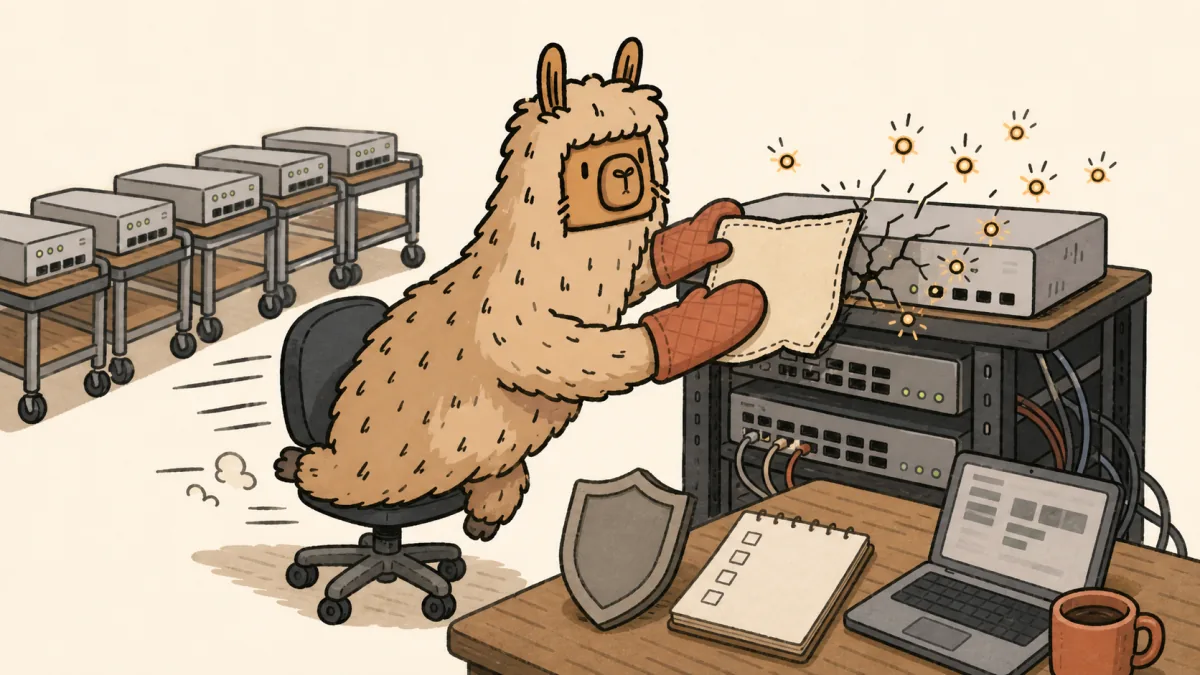
That is where many MSPs get burned. A scan report is not a remediation plan. A security assessment is not a signed scope. A scary PDF is not a client decision. If the report does not become owners, budget, exceptions, accepted risk, and quote-ready work, it mostly becomes liability with nicer formatting.
ConnectSecure vs Galactic Advisors at a glance
| Decision area | ConnectSecure usually fits | Galactic Advisors usually fits |
|---|---|---|
| Core motion | Multi-tenant vulnerability management and compliance visibility | Independent validation, defensible evidence, advisory guidance, and security program packaging |
| Best MSP use case | You want to scan, prioritize, report, and track remediation across clients | You want third-party proof, client risk evidence, documentation, and help selling or defending the security program |
| Technical findings | Stronger fit for asset discovery, internal/external scanning, M365 and Google Workspace scans, EPSS-style prioritization, and remediation workflow | Stronger fit for penetration testing, vulnerability assessments, independent review, evidence, and business-facing validation |
| Client conversation | "Here are the vulnerabilities, priorities, and remediation items we need to address" | "Here is the proof, risk story, and documentation that backs the security recommendation" |
| MSP liability angle | Helps create repeatable reporting and remediation tracking | Centers the proof question: can the client show evidence that the right security actions happened? |
| Weak fit | Treating the tool as a complete advisory service without owning follow-through | Treating the assessment as the operational system that will manage every patch, ticket, and recurring finding |
If your team needs recurring scanning and vulnerability workflow, start with ConnectSecure. If your team needs independent evidence and a sharper advisory motion, start with Galactic Advisors.
If your team needs to turn findings into client-approved work, neither tool should be the last stop.
If your shortlist is scanner-to-scanner instead of scanner-to-advisor, use the ConnectSecure vs CYRISMA comparison. It keeps the same question in view: who owns remediation after the report lands?
What ConnectSecure is built to solve
ConnectSecure's public vulnerability-management page positions the product around a full vulnerability lifecycle for MSPs: asset discovery, internal and external scanning, attack surface scans, Active Directory scans, compliance scans, PII scans, firewall scans, M365 scans, Google Workspace scans, web application scans, prioritization, remediation workflows, and reporting.
That is a practical center of gravity.
Most MSPs do not fail at security assessments because they cannot produce findings. They fail because findings are inconsistent, hard to prioritize, and difficult to carry across clients without drowning the team.
ConnectSecure is strongest when:
- The MSP wants repeatable multi-client visibility. You need per-client scanning, dashboards, reporting, and the ability to compare risk without rebuilding the process every time.
- Vulnerability prioritization matters. ConnectSecure's public materials talk about exploit likelihood, EPSS, CVE intelligence, and moving beyond raw CVSS panic.
- The service desk needs remediation work. A finding should become a ticket, a task, a patch plan, or a client decision. Otherwise it is just another report to forget.
- Compliance reporting is part of the client conversation. ConnectSecure describes reporting that maps technical data into client-owner views and compliance context.
- Cloud and identity posture matter. M365 and Google Workspace scans are listed as part of its public scanning story, which matters for MSPs whose clients now live in SaaS more than in server closets.
The risk is treating the platform as the whole service.
A vulnerability-management tool can help you find, prioritize, and report. It can help make remediation more operational. It still does not decide whether remediation is included in the managed services agreement, quoted separately, deferred, accepted as risk, or escalated to the client owner.
That contract belongs to the MSP.
What Galactic Advisors is built to solve
Galactic Advisors has a different center of gravity. Its public pages focus on making cybersecurity defensible, justified, and proven. The homepage talks about independent validation, vulnerability elimination, documentation, audit readiness, compliance expectations, plain-language reporting, and proof clients and insurers can trust.
That is not the same job as "run another scan."
Galactic Advisors is strongest when:
- The MSP needs independent validation. Third-party testing has a different client and insurer feel than "our own tool says we did fine."
- The client needs evidence, not just recommendations. Galactic's public language leans hard into documentation, proof, and audit readiness.
- Liability is part of the conversation. CRN's 2026 coverage of Galactic Advisors CEO Bruce McCully centered on the question of whether clients can show evidence that protection is real. That is not a tiny concern for MSPs.
- The MSP wants to package a security program. The 2026 Advanced Security Stack Workshop page talks about standards, controls, pricing, documentation, risk acceptance logs, and defensible delivery.
- Client-facing security conversations need help. A technical finding rarely sells itself. It needs a story the client can understand without pretending every CVE is an emergency.
The risk is treating a validation and advisory motion like a patch queue.
Independent assessment helps prove where the risk is. It can make the client conversation sharper. It can help the MSP stop sounding like it is upselling fear. But the MSP still needs an operating path for the findings after the meeting ends.
If nobody owns that path, the assessment becomes a dramatic event instead of a managed service.
The pre-sales trap
Security assessment tools are dangerous in pre-sales when scope is vague.
A prospect asks, "Can you scan our network and show us what you find?" The MSP wants the deal, installs a tool, runs a scan, finds ugly gaps, and then has no signed boundaries for data handling, permissions, impact, remediation, disclosure, or blame.
That is how free discovery turns into unpaid liability.
Before any pre-sales assessment, define:
| Scope item | What to decide before scanning |
|---|---|
| Written permission | Who approved the scan, what systems are in scope, and what dates are allowed |
| Data handling | What data the MSP may collect, where it is stored, and who can see it |
| Impact boundary | Whether active scanning, credentialed scanning, or external scanning is allowed |
| Remediation promise | Whether the scan includes fixes or only findings |
| Reporting audience | Who receives the report and how sensitive findings are shared |
| Sales boundary | Whether the work is free discovery, a paid assessment, or phase one of a project |
| Liability language | What happens if the client ignores the findings or already had known gaps |
This is where the MSP has to be boring on purpose.
If a prospect will not approve a written scope for a security assessment, they probably will not approve a clean remediation plan either. That is useful information before your team spends three nights turning free findings into a free proposal.
For the responsibility side, use a shared responsibility matrix. It forces the MSP and client to name who owns access reviews, patch windows, exception approval, evidence retention, and accepted risk.
Findings are not plans
ConnectSecure and Galactic Advisors can both help an MSP produce better evidence. Good.
The next step is where margin lives or dies.
A finding needs to become one of five things:
- Included work inside the current agreement.
- A separately quoted remediation project.
- A roadmap item with target quarter and budget range.
- An exception with written client acceptance.
- A "no action" item because the risk is low or not in scope.
If you skip that classification, every finding becomes ambient guilt.
That creates three problems. The client thinks the MSP is already handling it. The technician thinks sales needs to quote it. The account manager thinks the client rejected it last QBR, but nobody can find the note.
Now the finding is not security work. It is archaeology.
This is why assessment work should connect to MSP compliance pricing, client roadmaps, the MSP GRC and compliance software workflow, and the QBR template. The scan finds the issue. The pricing model decides what is included. The roadmap decides timing. The QBR gets the client decision.
Decision table by MSP profile
| MSP profile | Better first look | Why |
|---|---|---|
| MSP building recurring vulnerability management | ConnectSecure | The daily job is scanning, prioritization, reporting, and remediation workflow across clients. |
| MSP selling security validation or cyber liability evidence | Galactic Advisors | The daily job is proof, independent validation, client-ready evidence, and defensible documentation. |
| MSP with immature patch and remediation process | ConnectSecure first | You need operational findings to land somewhere before adding more advisory packaging. |
| MSP with clients pushing back on security recommendations | Galactic Advisors first | Third-party proof and evidence can make the client conversation less about opinion. |
| MSP preparing for CMMC, HIPAA, SOC 2, or insurance conversations | Depends on scope | Use ConnectSecure for recurring technical visibility. Use Galactic when independent proof and documentation matter. |
| MSP doing free prospect scans with no scope | Neither yet | Write the assessment scope, permission boundary, and liability language first. |
| MSP that keeps finding risk but not quoting the work | Scopable plus the right assessment source | The bottleneck is not the finding. It is turning the finding into approved, scoped work. |
The honest answer may be both. ConnectSecure can help run recurring vulnerability management. Galactic Advisors can help validate and package security proof. But buying both without a decision workflow just gives you two places to create follow-up work nobody owns.
Demo checklist for ConnectSecure vs Galactic Advisors
Do not demo either option with a perfect sample client.
Use a messy client with stale servers, old switches, mixed Microsoft 365 licensing, weak MFA coverage, inconsistent patching, and a client owner who hates security spend. That is the real test.
Ask these questions:
- Can we define scan scope by client, site, asset class, and credential type?
- Can the output separate urgent risk from noisy findings?
- Can the report show enough evidence for a client, insurer, auditor, or attorney?
- Can the MSP suppress or defer a finding with a reason and review date?
- Can a finding become a ticket, project, roadmap item, or quote without manual retyping?
- Can we track whether the client accepted, rejected, or funded the recommendation?
- Can we produce a clean executive summary without hiding technical detail from the delivery team?
- Can we prove what changed between last quarter and this quarter?
- Can we handle small clients without turning every assessment into unpaid consulting?
- Can we explain what the tool does not own?
That last question matters.
Vendors usually show what works. MSPs need to find the boundary where the tool stops and the service begins.
Where Scopable fits
Scopable is not a vulnerability scanner, penetration testing firm, or security validation lab.
The part Scopable cares about is the handoff after the finding exists.
When an assessment finds exposed services, stale MFA exceptions, missing EDR coverage, weak backup evidence, or unsupported systems, the MSP needs to turn that into client-facing work:
- What did we find?
- Why does it matter?
- Is it included, quoted, deferred, or accepted risk?
- Who owns the decision?
- What budget range should the client expect?
- What belongs on the roadmap?
- What should become a quote now?
That is the gap between assessment and revenue.
ConnectSecure and Galactic Advisors can help create useful evidence. Scopable helps MSPs carry that evidence into roadmaps, budgets, quotes, approvals, and client decisions. The goal is not another report. The goal is fewer security findings dying in meeting notes while the MSP quietly owns the risk.
If that is the messy part of your process, start your Scopable free trial. Bring the ugly assessment. Those are the ones worth fixing.
FAQ
Is ConnectSecure or Galactic Advisors better for MSPs?
ConnectSecure is usually better when the MSP needs recurring vulnerability management, multi-client scanning, prioritization, remediation workflow, and reporting. Galactic Advisors is usually better when the MSP needs independent validation, evidence, documentation, advisory guidance, and a stronger client security story.
Is a vulnerability assessment the same as a remediation plan?
No. A vulnerability assessment identifies and prioritizes findings. A remediation plan assigns owners, timeline, budget, exclusions, accepted risk, and client approval. MSPs should not treat a scan report as a signed scope of work.
Should MSPs run security assessments during pre-sales?
Only with written permission and a clear scope. Define systems in scope, data handling, scan method, report audience, remediation limits, and liability language before scanning a prospect environment. Free security discovery without boundaries can create unpaid consulting and messy blame.
How should MSPs turn assessment findings into quotes?
Classify every finding as included work, separately quoted remediation, roadmap item, accepted risk, or no action. Then carry the approved items into the SOW, quote, or QBR decision record. The finding is only useful when it becomes a client decision.
Sources
- ConnectSecure vulnerability management
- ConnectSecure guide to network security assessments for MSPs
- ConnectSecure vulnerability management implementation practices
- Galactic Advisors homepage
- Galactic Advisors Protect Your MSP
- Galactic Advisors Advanced Security Stack Workshop 2026
- CRN coverage of Galactic Advisors on MSP cyber liability
- Lavawall guide to vulnerability scanning tools for MSPs
Frequently Asked Questions
Is ConnectSecure or Galactic Advisors better for MSPs?
ConnectSecure is usually better for MSPs that need recurring vulnerability management, multi-client scanning, prioritization, remediation workflow, and reporting. Galactic Advisors is usually better when the MSP needs independent validation, evidence, documentation, advisory guidance, and a stronger client security story. For more detail, see ConnectSecure vs Galactic Advisors comparison.
Is a vulnerability assessment the same as a remediation plan?
No. A vulnerability assessment identifies and prioritizes findings. A remediation plan assigns owners, timeline, budget, exclusions, accepted risk, and client approval. MSPs should not treat a scan report as a signed scope of work.
Should MSPs run security assessments during pre-sales?
Only with written permission and a clear scope. Define systems in scope, data handling, scan method, report audience, remediation limits, and liability language before scanning a prospect environment. Free security discovery without boundaries can create unpaid consulting and messy blame.
How should MSPs turn assessment findings into quotes?
Classify every finding as included work, separately quoted remediation, roadmap item, accepted risk, or no action. Then carry the approved items into the SOW, quote, or QBR decision record. The finding is only useful when it becomes a client decision.